
Homam / Havan Online
About Course
Overview
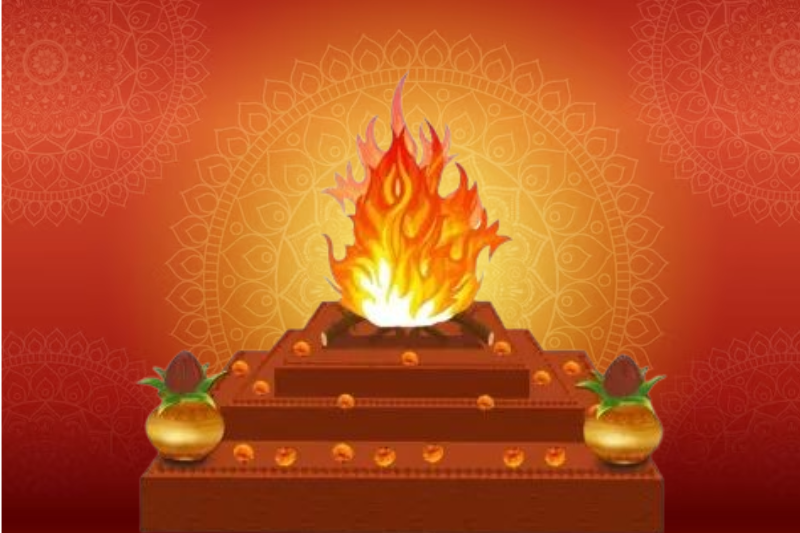
Homam, also known as Havan or Yajna, is one of the oldest and most sacred spiritual practices described in the Vedas. It is the fire ritual through which divine energy is invoked, purified, and offered to the universal consciousness. The sacred fire (Agni) is not merely a physical element; it is the living embodiment of divine energy, the purifier of the mind, body, and surroundings, and the messenger between humans and the Gods. By performing Homam with devotion and discipline, the sadhaka aligns with cosmic rhythms, removes negativity, and invites abundance, peace, and spiritual awakening into life.
Homam is much more than the physical act of offering ghee, herbs, or grains into the sacred fire. It is a profound sadhana, a form of meditation in action, where intention, sound, and energy converge. Each mantra recited during the Homam is a vibration that resonates with the subtle dimensions of existence. The offerings into the fire are transformed into subtle energies, nourishing the deities and purifying the environment and the inner being of the sadhaka. Through this process, karmic debts are reduced, and spiritual progress is accelerated.
The significance of Homam in Sri Vidya and other tantric traditions is particularly high. Specific Homams are performed to invoke the blessings of deities such as Lalitha Tripura Sundari, Raja Shyamala, Maha Varahi, Bhairava, or Ganapati. Each deity presides over particular energies and aspects of life, and the Homam acts as a bridge to receive their grace. For instance, Ganapati Homam removes obstacles, Bhairava Homam provides protection and courage, while Lalitha Sahasranama Homam brings wisdom, prosperity, and self-realisation.
Homam is also a transformative practice for the mind and heart. The fire purifies negative thoughts, anger, fear, and attachment, while the sacred vibrations of the mantras elevate the consciousness. Regular participation in Homam leads to inner calm, clarity of thought, and emotional stability. It awakens a deep connection with the divine, reinforcing the understanding that life itself is a sacred offering.
Preparation and discipline are essential for effective Homam. The sadhaka must observe cleanliness, maintain mental focus, and cultivate devotion. The place of Homam is traditionally sanctified, and the fire is treated with reverence as a living presence. Mantras are chanted precisely, each with specific intonation, rhythm, and intention. The offerings—ghee, herbs, rice, and wood—are considered sacred carriers of energy, and the act of offering itself becomes a form of surrender to the Divine.
Student Ratings & Reviews